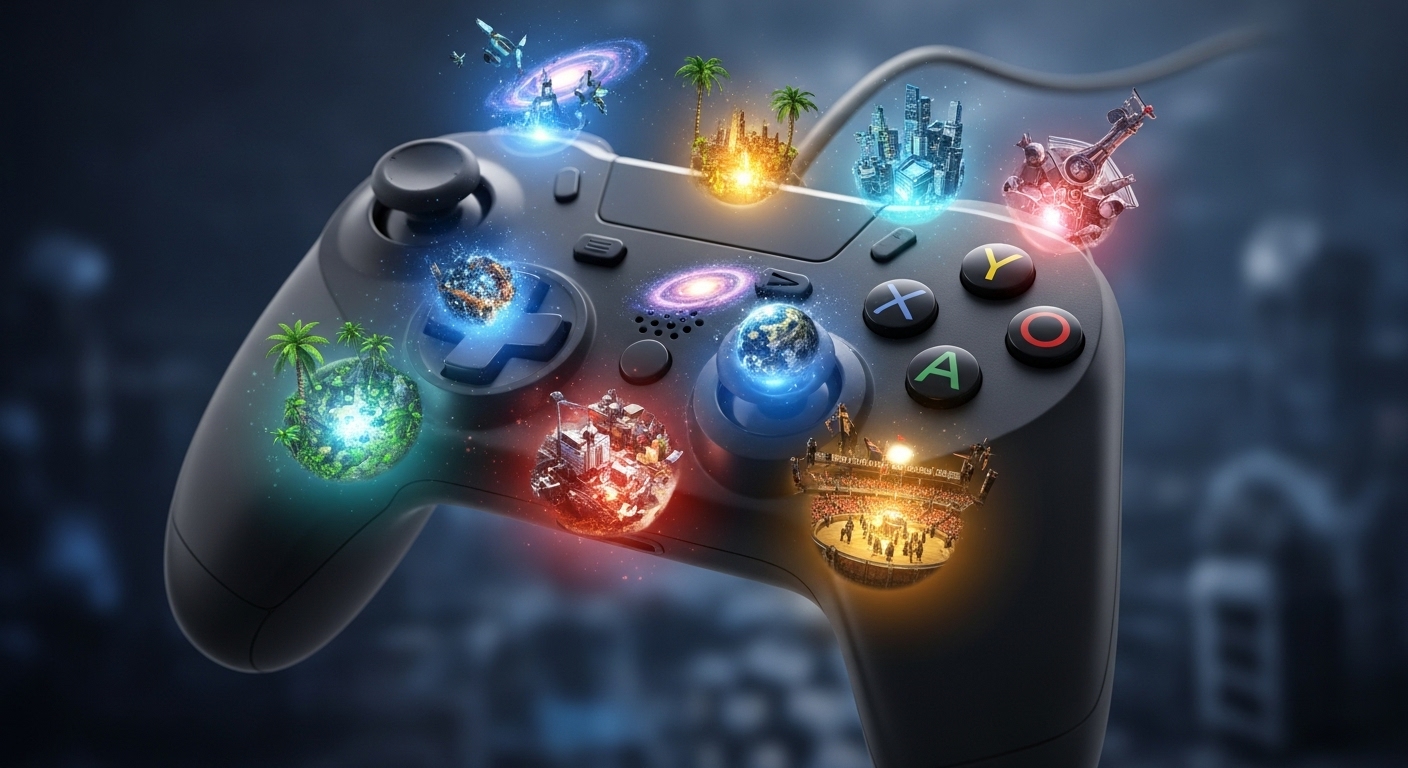
In the ever-evolving world of gaming, innovation has always been the key to success. While the early days of gaming were defined by simple mechanics and limited graphics, the industry has seen a massive transformation in the last few decades. Today, video games are not just a form of entertainment; they are an art form, a cultural phenomenon, and a platform for storytelling, social interaction, and even education. One of the most exciting aspects of modern gaming is the constant push toward unique experiences—games that break from tradition, offer something new, and redefine what we expect from this medium. This post will explore the rise of unique gaming experiences, the games that have led the way, and how innovation continues to shape the gaming landscape.
The Evolution of Gaming: From Simplicity to Complexity
When video games first emerged in the 1970s and 1980s, they were simple, pixelated experiences with limited mechanics. Titles like Pong and Space Invaders set the stage for a new form of entertainment but were far from complex. As technology improved, so did the complexity of games. By the 1990s, titles like Super Mario 64 and The Legend of Zelda: Ocarina of Time revolutionized gaming with their three-dimensional worlds, intricate storylines, and more immersive experiences.
However, it wasn’t just the graphics and gameplay that changed—it was the approach to how games could be designed. Developers began experimenting with new ways to tell stories, engage players, and create worlds that felt alive. This experimentation led to the creation of many unique games that would go on to challenge the traditional norms of the gaming industry.
What Makes a Game Unique?
Before diving into specific examples, it’s important to understand what makes a game unique. There are several factors that can contribute to a game’s uniqueness, and often it’s a combination of these elements that makes a game stand out. These factors include:
- Gameplay Mechanics: Some of the most unique games introduce innovative gameplay mechanics that set them apart from others. These games encourage players to think differently and approach challenges in new ways.
- Narrative Design: A unique narrative structure or unconventional storytelling techniques can make a game memorable. This includes branching storylines, non-linear narratives, and games that let players create their own story.
- Artistic Direction: While many games focus on realism, others embrace a more abstract or stylized approach. Unique art direction can create a distinct atmosphere and immerse players in a world that feels entirely different from anything they’ve experienced before.
- Player Interaction: Whether through multiplayer features or novel ways of interacting with the game world, the way players engage with the game is a crucial aspect of its uniqueness.
- Innovation in Genre: Some of the most unique games are those that blend genres in new and unexpected ways. These hybrid games can combine elements of strategy, action, puzzle-solving, and even simulation to create something entirely fresh.
The Impact of Unique Games on the Industry
The gaming industry has always been driven by technological advancements, but it’s the creative risks taken by developers that have truly shaped the medium. Some games are just a few steps ahead of the curve, experimenting with ideas that others will eventually adopt. Over the years, the unique games that have succeeded have influenced not only future game design but also the broader cultural landscape.
Games that push boundaries often inspire new trends and challenge traditional thinking. For example, the success of open-world games like Grand Theft Auto III and The Elder Scrolls V: Skyrim led to a surge in open-world game development, and today, it’s a popular genre in its own right. Similarly, the rise of indie games like Minecraft and Undertale has shown that smaller developers can bring fresh and unique experiences to the gaming community, often with less reliance on high-end graphics or massive budgets.
It’s also worth noting how unique games often redefine what is possible in the gaming medium. Titles like The Witcher 3: Wild Hunt and Red Dead Redemption 2 set new standards for storytelling in games, while Fortnite revolutionized multiplayer gaming with its battle royale mode. These games show that uniqueness isn’t just about innovation for the sake of novelty—it’s about creating a meaningful and engaging experience that resonates with players.
1. Journey – The Power of Minimalism
Released in 2012 by Thatgamecompany, Journey is a prime example of how unique game design can lead to a transcendent experience. The game is set in a vast desert, where players control a robed traveler making their way toward a distant mountain. There are no spoken words or complex mechanics—just exploration and discovery. What makes Journey so unique is its ability to create a deep emotional experience with minimal gameplay elements.
The game’s multiplayer system is also groundbreaking. Players can encounter others on their journey, but they cannot communicate directly. Instead, they communicate through musical chimes and visual cues. This system creates an intimate form of cooperation and connection, as players work together to reach the end goal without ever speaking to one another.
The beauty of Journey lies in its simplicity. It proves that a game doesn’t need complex mechanics or a long narrative to make an impact. Through its stunning art direction, minimalist gameplay, and evocative music, Journey invites players to experience a profound sense of connection, solitude, and wonder.
2. The Stanley Parable – A Game About Choices
In 2013, The Stanley Parable introduced a new type of narrative-driven game. At first glance, it appears to be a simple first-person exploration game where you follow a narrator’s instructions. However, as soon as you start making decisions, the game takes on a completely different form.
The brilliance of The Stanley Parable lies in its ability to challenge players’ expectations. The more you stray from the narrator’s path, the more the story changes. There are numerous endings, each one offering a unique perspective on the concept of free will and player agency. The game continually asks questions about the nature of choice and the role of the player in shaping a narrative.
What sets The Stanley Parable apart is its ability to break the fourth wall and force players to confront the limitations of choice in traditional games. It’s a meta-commentary on game design itself, using humor and irony to explore themes of control and freedom.
3. Outer Wilds – The Beauty of Discovery and Time
Outer Wilds is a unique exploration game that blends science fiction with a time-loop mechanic. Set in a small solar system, players take on the role of an astronaut who must uncover the mysteries of an ancient civilization before the solar system collapses. The twist? Every 22 minutes, the solar system resets, and players must use the knowledge they’ve gained to progress in future loops.
What makes Outer Wilds so unique is its emphasis on discovery and curiosity. There are no combat encounters, no quests to follow, just a world waiting to be explored. The game encourages players to learn from each loop and use that knowledge to unlock new secrets. Each 22-minute cycle is an opportunity to uncover something new, and the time-loop mechanic creates a sense of urgency without diminishing the thrill of exploration.
The game’s open-world design, coupled with its non-linear storytelling, makes Outer Wilds one of the most original space exploration games ever created. It challenges players to think critically and embrace the unknown, making it a standout in the genre.
4. Celeste – A Platformer With Heart
While Celeste might appear to be a typical challenging platformer, it is much more than that. Released in 2018 by Matt Makes Games, Celeste tells the story of Madeline, a young woman who is climbing a mountain in order to confront her inner demons. The game’s difficulty is closely tied to its narrative, with each level representing an emotional challenge for Madeline to overcome.
What makes Celeste unique is how it combines its tough platforming mechanics with an emotional and introspective narrative. The game doesn’t just focus on skill—it focuses on personal growth. The platforming challenges mirror Madeline’s internal struggles, and as players overcome these obstacles, they are helping her overcome her fears and insecurities. The game’s pixel art style and evocative soundtrack only enhance the emotional experience, making it one of the most touching games in recent years.
5. Baba Is You – Changing the Rules of Puzzle Games
Baba Is You is a puzzle game that flips the traditional puzzle genre on its head. The game allows players to manipulate the very rules of the game world itself. By rearranging blocks of text, players can change the mechanics of the game. For example, changing “Baba Is You” to “Rock Is You” allows players to control rocks instead of Baba, creating entirely new puzzles and solutions.
What makes Baba Is You unique is how it allows players to think outside the box. Instead of simply solving puzzles, players must alter the rules themselves, creating endless possibilities for problem-solving. It’s a brilliant example of how game mechanics can be used in creative ways to push the boundaries of traditional gameplay.
Conclusion: The Future of Unique Gaming Experiences
The games discussed in this post represent just a few examples of how unique gaming experiences are shaping the industry. Innovation in gaming continues to push the boundaries of what’s possible, and as technology advances, we can expect even more creative and groundbreaking titles to emerge.
What these games all have in common is their ability to offer something new—whether through gameplay mechanics, narrative design, or player interaction. They break from the norms and offer experiences that are memorable, impactful, and, most importantly, unique. As the gaming industry continues to evolve, one thing is certain: the future of gaming will be defined by those games that dare to be different.