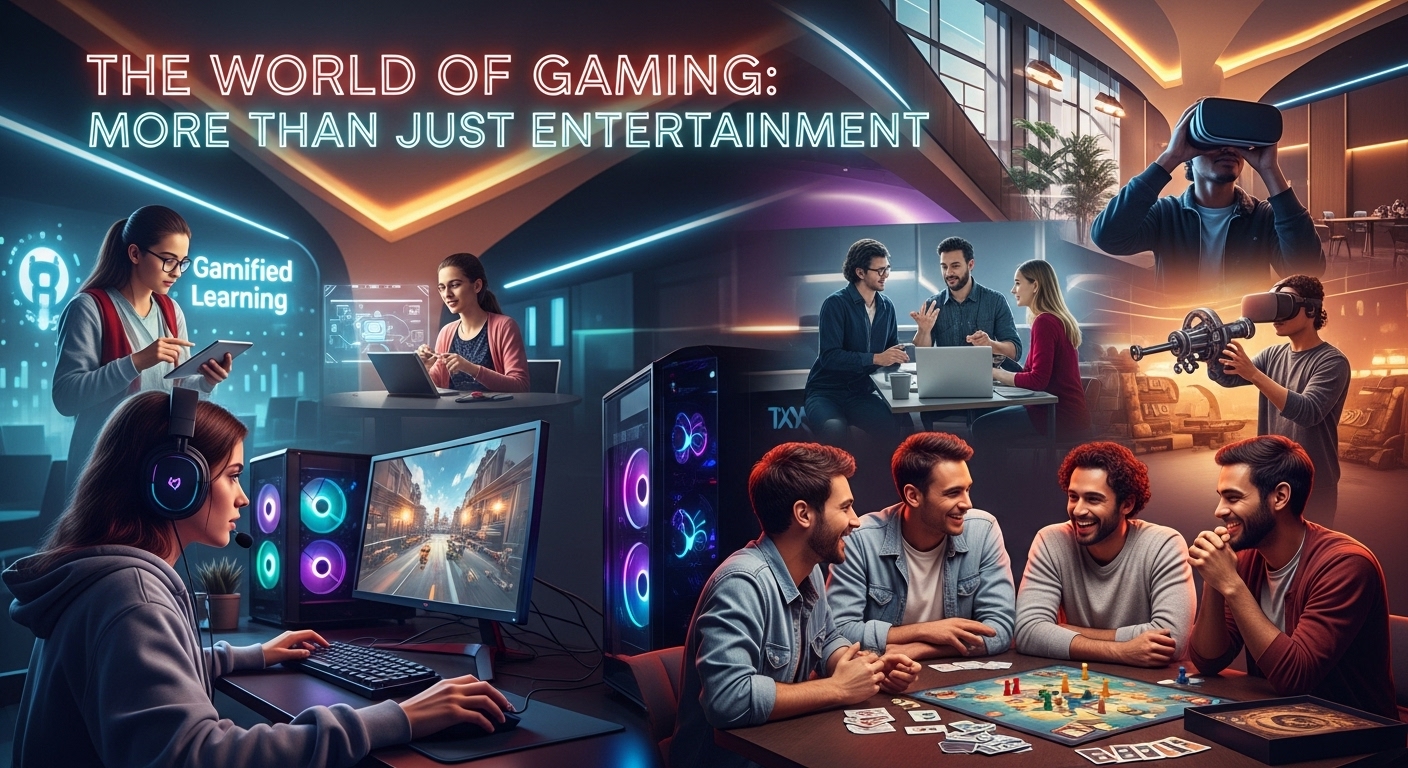
Gaming is no longer just a pastime; it has transformed into a cultural, technological, and social phenomenon that touches millions of lives worldwide. From its humble beginnings in arcades to the immersive experiences of modern consoles and virtual reality, gaming continues to evolve at a staggering pace. It entertains, challenges, and connects people in ways that no other medium can. This article delves into the history, evolution, impact, and future of gaming, offering an in-depth look at how digital play has reshaped the way we interact with the world.
The Birth of Video Games
The story of gaming begins in the 1970s with the creation of simple arcade games like Pong and Space Invaders. These early games were rudimentary by today’s standards, but they captivated audiences with their interactive nature. For the first time, players could control characters on a screen, compete for high scores, and experience entertainment beyond passive viewing. The launch of home consoles, most notably the Atari 2600, brought gaming into households, making it accessible to families and young gamers alike.
The 1980s introduced legendary franchises that are still celebrated today, including Super Mario Bros, The Legend of Zelda, and Pac-Man. These games not only provided engaging challenges but also introduced storytelling, character development, and world-building concepts that would become integral to the medium. The era set the stage for gaming as a creative and narrative-driven experience.
Technological Advancements and Immersive Experiences
As technology progressed, so did gaming. The 1990s saw the rise of 3D graphics, improved processing power, and more complex gameplay mechanics. Consoles like the Sony PlayStation and Nintendo 64 revolutionized gaming by offering immersive worlds with detailed graphics and rich soundtracks. Players could now explore expansive environments, solve intricate puzzles, and engage in fast-paced combat scenarios.
The evolution of hardware has continued to drive gaming forward. Modern consoles, high-end gaming PCs, and even mobile devices provide experiences that rival cinematic storytelling. Advanced graphics engines create lifelike visuals, realistic physics, and dynamic lighting, allowing players to become fully immersed in digital worlds. Virtual reality and augmented reality have pushed this immersion further, enabling players to step inside games and interact with environments in three-dimensional space.
The Social Dimension of Gaming
Gaming has always had a social component, but the rise of online multiplayer games has amplified it. Games now connect millions of players across the globe, creating communities built around shared experiences. Competitive esports tournaments attract massive audiences and foster camaraderie, teamwork, and healthy competition. Titles such as League of Legends, Fortnite, and Call of Duty have become cultural touchstones, where players collaborate, strategize, and celebrate achievements together.
Beyond competition, many games encourage collaboration and creativity. Sandbox games like Minecraft and Roblox allow players to build intricate worlds, experiment with design, and work together on ambitious projects. Gaming communities extend beyond the screen, offering spaces for discussion, fan creations, and role-playing. These social interactions transform gaming from a solitary hobby into a shared cultural experience.
Mobile Gaming: Gaming on the Go
The advent of mobile gaming has transformed how people engage with games. Smartphones and tablets have made gaming more accessible, appealing to casual players who might not own a console or PC. Mobile games such as Candy Crush, Clash of Clans, and Pokémon Go have reached millions of users, demonstrating that gaming can be convenient, entertaining, and engaging anywhere and anytime.
Mobile gaming also introduced innovative gameplay mechanics that leverage touchscreen technology, accelerometers, and augmented reality features. Players can enjoy brief, engaging sessions during commutes, breaks, or leisure time, making games an integral part of daily life. The accessibility of mobile gaming has expanded the audience dramatically, appealing to all ages and demographics.
Educational and Cognitive Benefits of Gaming
While gaming is primarily associated with entertainment, it has numerous educational and cognitive benefits. Many games require strategic thinking, problem-solving, and decision-making, which can enhance cognitive development. Educational games target subjects like mathematics, language skills, and science, offering interactive and fun ways to learn.
Moreover, gaming nurtures soft skills such as teamwork, communication, and leadership. Multiplayer strategy games require coordination and collaboration, while narrative-driven games challenge players to analyze stories, make moral decisions, and consider consequences. By engaging with these experiences, players develop skills that extend beyond the screen and into everyday life.
Mental Health and Emotional Wellbeing
Gaming has faced criticism for potential negative effects, including addiction and social isolation. However, research has shown that gaming can offer significant mental health benefits when approached responsibly. Cooperative and social games reduce feelings of loneliness and foster a sense of belonging. Strategic and problem-solving games improve focus, memory, and analytical thinking.
Gaming can also serve as a form of stress relief and emotional escape. Immersing oneself in a compelling game world offers a break from daily pressures, allowing players to relax, recharge, and enjoy a sense of achievement. Certain games are even being used therapeutically to aid cognitive rehabilitation, anxiety management, and emotional development.
Esports and Professional Gaming
Esports has elevated gaming from hobby to profession. Professional gamers compete in high-stakes tournaments with prize pools reaching millions of dollars. These athletes undergo rigorous training, focusing on skill, reflexes, strategy, and teamwork. Streaming platforms provide additional avenues for income, allowing gamers to build audiences and personal brands.
The rise of esports has influenced game design and marketing, as developers now create competitive titles with balanced gameplay and spectator appeal. The professionalization of gaming has also increased its visibility, respect, and cultural significance, attracting fans who might not otherwise engage with the medium.
Gaming as a Cultural Force
Gaming is more than a technological innovation; it is a cultural phenomenon. Games reflect societal trends, explore complex themes, and offer unique storytelling possibilities. Indie games often push artistic boundaries, while blockbuster franchises define mainstream entertainment. Players experience narratives, engage with characters, and participate in worlds that provoke thought, emotion, and creativity.
Gaming also connects generations and communities. Parents and children, friends, and strangers can bond over shared gameplay experiences. Events, conventions, and online communities provide platforms for celebration, creativity, and discussion. This cultural significance ensures that gaming is not just a pastime but a meaningful part of contemporary society.
The Future of Gaming
The future of gaming promises even greater innovation. Cloud gaming removes hardware limitations, allowing high-quality games to be streamed on multiple devices. Artificial intelligence enables adaptive gameplay, smarter opponents, and more personalized experiences. Virtual reality and augmented reality continue to expand the boundaries of immersion, providing interactive and sensory-rich worlds.
As technology progresses, gaming is expected to integrate further with education, social media, and even professional development. Cross-platform play, inclusive design, and accessibility improvements will make gaming a universal medium for entertainment, creativity, and connection. The potential for growth and innovation ensures that gaming will remain a dynamic and influential part of society for years to come.
Conclusion: Gaming as a Way of Life
Gaming has grown from simple pixelated screens to vast, immersive universes that entertain, challenge, and connect millions of people worldwide. It is a medium that combines technology, art, storytelling, and social interaction, offering unique experiences that extend beyond the screen. From casual mobile games to competitive esports, from educational benefits to mental health applications, gaming touches countless aspects of modern life.
The industry’s evolution demonstrates that gaming is more than just a hobby—it is a way of life. It fosters creativity, builds communities, and opens new worlds for exploration. For both newcomers and veteran players, the digital playground continues to expand, offering endless opportunities for engagement, discovery, and enjoyment.