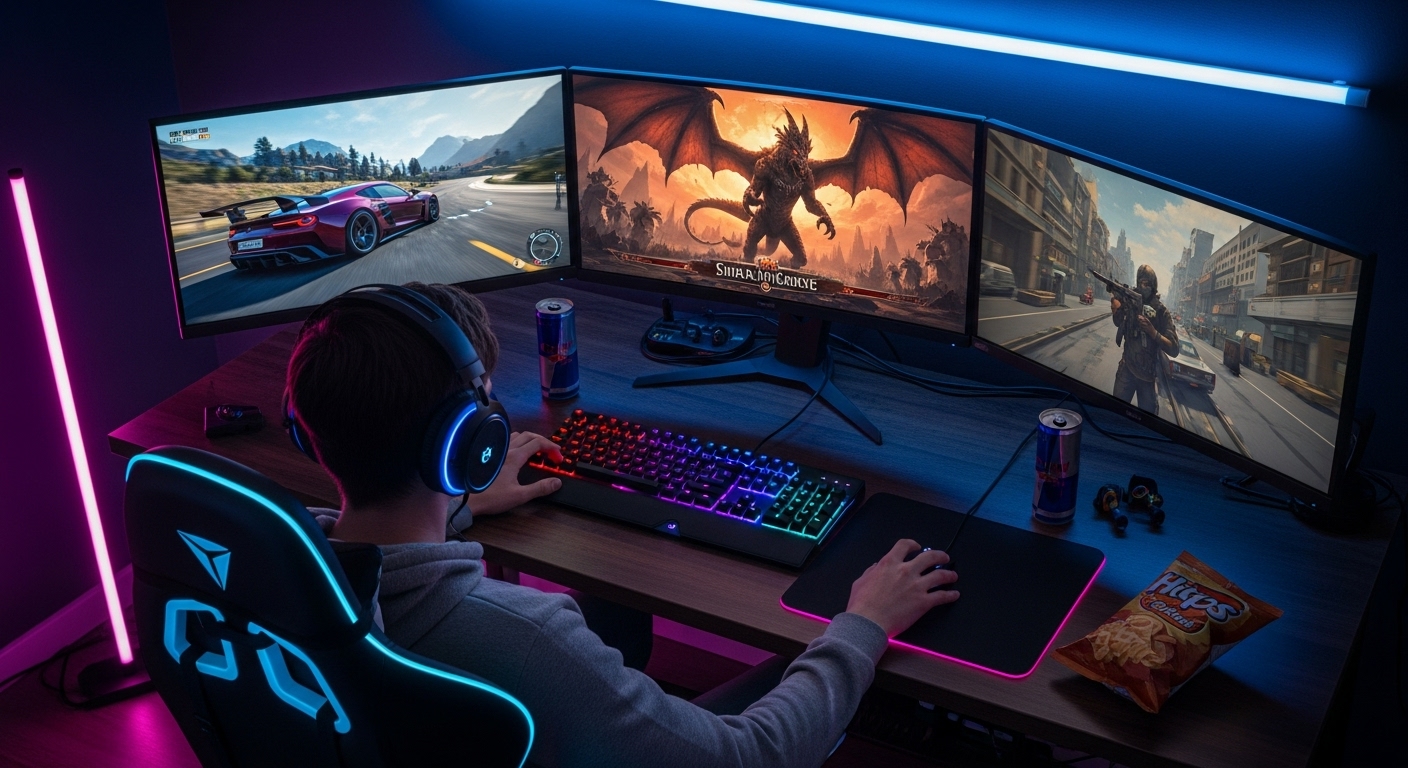
Introduction: The World of Gaming
Gaming has evolved far beyond the image of a child huddled in front of a console or a teenager glued to a computer screen. In today’s digital era, gaming encompasses a wide array of experiences, from casual mobile games to immersive virtual reality worlds. It has become a significant part of modern culture, influencing social interactions, technology development, and even education. Gaming is no longer just a form of entertainment; it is a lifestyle, a community, and, for many, a career.
The growth of the gaming industry is staggering. With billions of dollars in annual revenue and millions of active players worldwide, gaming is a dominant force in the entertainment sector. What makes this phenomenon particularly fascinating is its versatility. Games can be competitive, cooperative, casual, or deeply immersive, catering to virtually every personality and preference.
The Evolution of Gaming
The history of gaming is a story of technological innovation and cultural adaptation. Early video games were simple, often consisting of pixelated graphics and straightforward mechanics. Classics like Pong and Space Invaders may seem primitive now, but they laid the foundation for decades of creativity and engagement.
As technology advanced, so did the complexity and appeal of games. The introduction of home consoles in the 1980s and 1990s brought gaming into living rooms, transforming it from a niche hobby into a mainstream pastime. The rise of personal computers further expanded possibilities, allowing developers to create intricate worlds, compelling narratives, and multiplayer experiences that connected people across the globe.
Today, gaming includes console games, PC games, mobile apps, cloud-based gaming, and virtual reality experiences. Each platform brings a unique flavor to the gaming world, and players can choose experiences that suit their interests, schedules, and hardware capabilities.
The Psychological Appeal of Games
Gaming captivates people for reasons beyond visual appeal or competitive thrill. Psychologists have studied the impact of gaming on human behavior and found that it engages the brain in ways traditional media often cannot. Games stimulate problem-solving, strategic thinking, and decision-making skills. They can provide instant feedback and reward systems that reinforce learning and persistence.
Role-playing games and narrative-driven adventures offer players a sense of agency. Decisions made within a game can shape outcomes, providing a feeling of control and accomplishment. This sense of empowerment can be especially appealing in a world where many aspects of daily life feel rigid and predetermined.
Additionally, social gaming fosters connection and community. Multiplayer games allow players to collaborate, compete, and communicate with friends and strangers alike. These interactions often extend beyond the game itself, creating lasting friendships and shared experiences.
Gaming as a Social Platform
One of the most transformative aspects of gaming is its ability to connect people. Online multiplayer games have created virtual spaces where people from different countries, cultures, and backgrounds come together with a shared goal. Whether it’s forming a guild in a role-playing game, strategizing in a battle royale, or building communities in sandbox environments, gaming has redefined social interaction in the digital age.
The social aspect of gaming has also given rise to streaming and esports. Players now have platforms to showcase their skills, entertain audiences, and even monetize their hobby. Watching a skilled player navigate challenges or achieve feats in a game can be as engaging as watching professional sports. This phenomenon has created a new kind of celebrity, the gamer, and it has blurred the lines between playing for fun and performing for an audience.
Educational Potential of Gaming
Beyond entertainment, gaming has remarkable educational potential. Games can teach skills ranging from critical thinking and spatial reasoning to collaboration and time management. Educational games for children introduce concepts in an interactive and engaging manner, making learning enjoyable and effective.
Even complex subjects like mathematics, history, and science have found innovative representation in gaming. Simulations and strategy games allow players to experiment with real-world scenarios in a low-risk environment. For example, city-building games encourage planning, resource management, and strategic thinking, while historical games offer immersive experiences that bring the past to life in ways textbooks cannot replicate.
Moreover, gamification—the integration of game-like elements into learning—has gained traction in schools and corporate training programs. Badges, rewards, and challenges motivate learners and create a sense of achievement, showing that the mechanics of gaming can enhance motivation and engagement in non-gaming contexts.
The Technology Behind Modern Games
Modern games are marvels of technology, combining art, storytelling, and sophisticated programming. High-definition graphics, realistic physics, and immersive soundscapes create experiences that are more lifelike than ever. Developers employ complex algorithms and artificial intelligence to adapt game behavior, making each session unique and challenging.
Virtual reality (VR) and augmented reality (AR) have further expanded the horizons of gaming. VR immerses players entirely in digital worlds, offering experiences that feel tangible and immediate. AR overlays digital elements onto the real world, blending gaming with everyday life. These technologies are not only entertainment tools but also avenues for experimentation in fields like therapy, training, and education.
Cloud gaming has also revolutionized accessibility. Players no longer need expensive hardware to experience high-quality games; streaming allows them to play demanding titles on minimal devices. This technological shift democratizes gaming, opening doors for a broader and more diverse audience.
The Cultural Impact of Gaming
Gaming has seeped into popular culture in profound ways. Iconic characters, storylines, and worlds have transcended the medium, inspiring movies, books, music, and fashion. Cosplay, fan art, and conventions are testaments to the passion and creativity that gaming evokes.
Moreover, games are increasingly recognized as cultural artifacts. They reflect societal trends, explore ethical dilemmas, and challenge players to consider perspectives beyond their own. From moral decision-making in story-driven games to the representation of diverse characters and narratives, gaming has become a lens through which we explore identity, values, and human experience.
The Business of Gaming
The gaming industry is a powerhouse of economic activity. Developers, publishers, hardware manufacturers, and streaming platforms all contribute to a complex ecosystem. Microtransactions, downloadable content, and subscription models have redefined how games generate revenue. Unlike traditional entertainment, games often maintain long-term engagement, allowing companies to monetize player experiences over time.
Esports is a rapidly growing segment, attracting sponsorships, advertising, and professional competition. Players now earn substantial incomes from tournaments, streaming, and endorsements. This professionalization of gaming has opened up career paths that were unimaginable a decade ago.
The Challenges of Gaming
Despite its many benefits, gaming is not without challenges. Excessive gaming can lead to social isolation, disrupted sleep, and, in extreme cases, addiction. Game developers and communities must navigate these issues responsibly, promoting healthy engagement and balance.
Another concern is inclusivity. While the industry has made strides in representing diverse characters and stories, there is still work to be done. Ensuring that games are accessible and welcoming to all players, regardless of gender, race, or physical ability, is crucial for the continued growth and cultural relevance of gaming.
The Future of Gaming
The future of gaming promises even greater innovation. Artificial intelligence may allow games to adapt dynamically to each player’s style, creating personalized experiences. Advancements in virtual reality and haptic feedback could make games indistinguishable from reality. Social experiences will continue to expand, potentially blending gaming, work, and social interaction into integrated virtual environments.
Moreover, the boundaries between gaming and other forms of media will likely continue to blur. Narrative-driven games could evolve into interactive films, educational platforms could become fully gamified, and collaborative digital spaces could redefine how we interact online. The potential is immense, and the only limit seems to be human imagination.
Conclusion: Gaming as a Cultural Force
Gaming is no longer a pastime; it is a cultural force with the power to shape how we think, connect, and experience the world. From fostering creativity and learning to building global communities, the impact of gaming is profound and far-reaching. As technology evolves and society adapts, gaming will continue to redefine entertainment, education, and social interaction.
Whether you are a casual player, a competitive gamer, or someone fascinated by the cultural implications of digital play, there is no denying the importance of gaming in contemporary life. It is an ever-expanding universe of possibility, inviting everyone to participate, explore, and create. Gaming is more than pixels on a screen—it is a reflection of human curiosity, ingenuity, and the timeless desire to play.