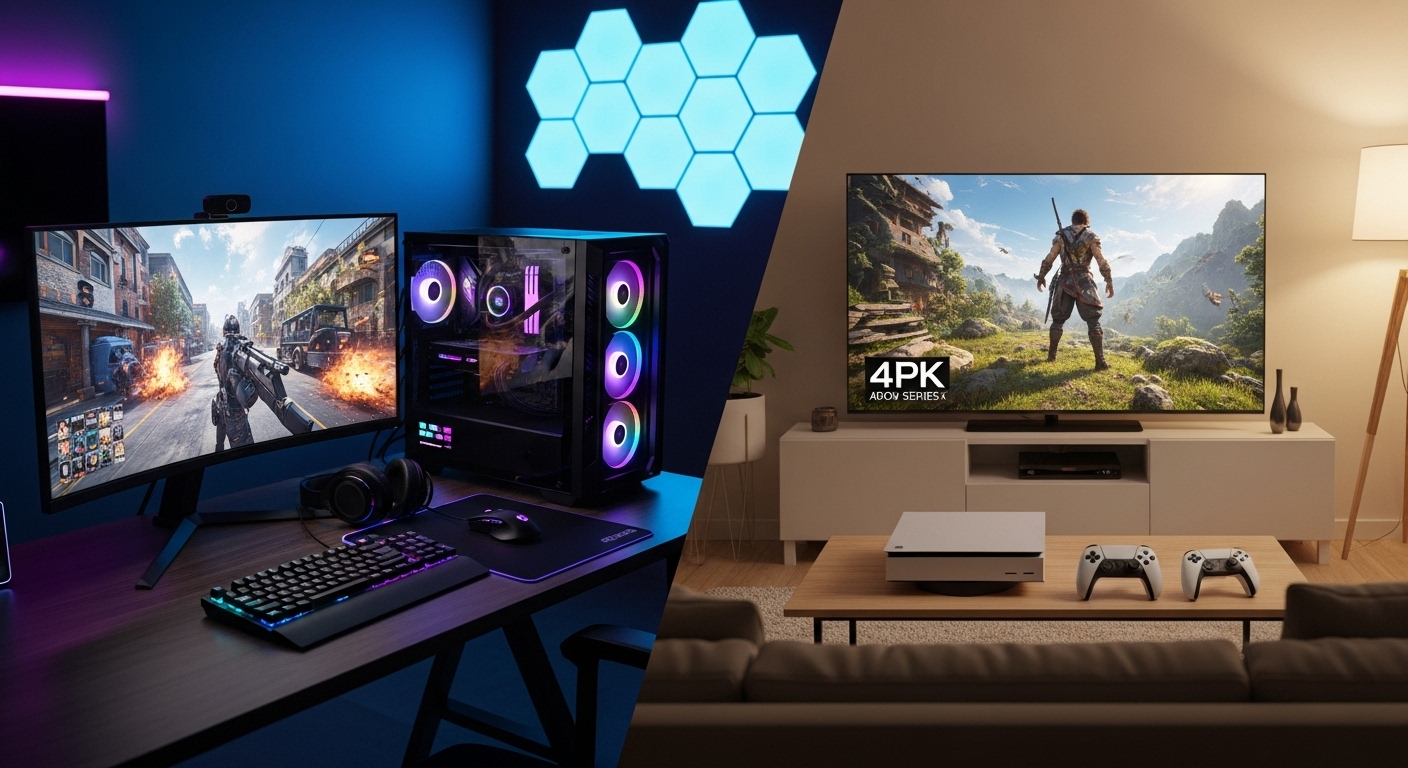
Introduction to the Debate
For decades, gamers across the world have been debating whether a gaming PC or a console is the superior choice. Both platforms have passionate communities that swear by their advantages, and both offer incredible experiences tailored to different types of players. Choosing between the two depends not just on budget but also on the kind of gaming experience one wants, as well as long-term value, performance, and flexibility. To settle the discussion, it is important to carefully analyze both platforms in detail.
Understanding Gaming PCs
A gaming PC is essentially a high-performance computer designed and optimized to play modern video games. Unlike regular desktop computers, gaming PCs often feature powerful graphics cards, fast processors, sufficient RAM, and custom cooling solutions. They can be built from scratch by assembling individual components, or purchased as prebuilt systems from manufacturers. One of the most appealing aspects of gaming PCs is their flexibility. Gamers can upgrade individual parts like the graphics card or processor whenever necessary, keeping the machine relevant for years. Beyond gaming, PCs also serve multiple purposes, from productivity and content creation to streaming and browsing.
Understanding Gaming Consoles
Consoles, on the other hand, are dedicated gaming machines designed specifically to run video games with minimal setup. Major brands such as Sony’s PlayStation, Microsoft’s Xbox, and Nintendo’s Switch dominate this market. Unlike PCs, consoles are not intended for upgrades beyond storage expansion or accessories. Their strength lies in their ease of use and affordability compared to gaming PCs. For most players, buying a console means plugging it into the TV, inserting a game, and playing immediately without worrying about hardware compatibility, drivers, or technical setups. Consoles also emphasize exclusive titles, which often define a generation of gaming hardware.
Performance Differences Between PCs and Consoles
Performance is one of the most important aspects of this debate. Gaming PCs typically offer superior performance thanks to customizable high-end hardware. Graphics cards in powerful PCs can render games at ultra settings, support resolutions up to 4K or even 8K, and deliver frame rates far higher than most consoles. PCs also support advanced technologies such as ray tracing, high refresh rate monitors, and variable refresh rate technologies. Consoles, while optimized for gaming, cannot usually match this raw power. Their hardware is standardized and limited by design to maintain affordability. However, optimization allows consoles to still deliver smooth gameplay and visually impressive experiences despite their technical limits.
Price and Affordability
The cost factor is often the biggest consideration for gamers. Consoles are generally far more affordable than gaming PCs. A new PlayStation or Xbox usually costs a fraction of what a high-end gaming PC does. This makes consoles more accessible to a wider audience, especially younger players or casual gamers who do not want to spend thousands of dollars. On the other hand, gaming PCs vary drastically in price. A budget gaming PC may cost only slightly more than a console, but high-end rigs can exceed several thousand dollars. However, PCs may save money in the long run due to cheaper game sales on platforms like Steam and the ability to upgrade individual parts instead of replacing the entire system.
Game Library and Exclusives
The library of games available on each platform is another crucial factor. Consoles, especially PlayStation and Nintendo, are known for their exclusive titles. PlayStation offers blockbuster exclusives such as The Last of Us, Spider-Man, and God of War, while Nintendo delivers timeless experiences like Mario and Zelda. These games are often considered system sellers, meaning many gamers buy a console just to play them. Gaming PCs, on the other hand, do not usually have exclusives of this nature, but they dominate in sheer quantity. With access to Steam, Epic Games Store, Origin, and countless other digital platforms, PC gamers enjoy a massive library including AAA titles, indie games, and mods unavailable on consoles.
Upgradability and Longevity
One of the strongest advantages of gaming PCs is upgradability. Gamers can extend the life of their PC by upgrading hardware over time. For example, replacing an old graphics card with a new one can breathe new life into the system without needing to replace everything. Consoles, by contrast, are locked systems. Once a new generation is released, the older one gradually loses support. While consoles may last five to seven years before being replaced, a well-maintained PC can remain relevant for over a decade with upgrades. This long-term flexibility makes PCs more future-proof, though at the cost of more frequent investment.
User Experience and Ease of Use
Ease of use is an area where consoles shine. Setting up a console is incredibly straightforward: plug it in, connect it to the internet, and start playing. The experience is seamless and designed for accessibility. Gaming PCs, however, can be more complicated. Building or configuring a PC requires technical knowledge, and maintaining one often involves updates, driver installations, and troubleshooting. For some gamers, this technical aspect is a downside, while for others it is part of the fun. Console gaming offers a couch-friendly, living room experience, while PCs often require a desk setup, though connecting a PC to a TV is also possible.
Multiplayer and Online Services
Both platforms offer multiplayer and online services, but in different ways. Consoles typically require paid subscriptions to access online multiplayer, such as PlayStation Plus or Xbox Game Pass Ultimate. These subscriptions often include free monthly games and cloud services, which add value. PC gaming, in contrast, generally offers free access to online multiplayer, with exceptions for specific games that use proprietary servers. PCs also excel in mods and community-driven content that enhance multiplayer experiences. However, consoles often feature more tightly integrated social features, voice chat, and party systems.
Portability and Flexibility of Use
Portability is another area worth comparing. Traditional gaming PCs are large and not designed to be portable, although gaming laptops have made this more feasible. Consoles are more compact, making them easier to transport between homes or plug into different TVs. Nintendo’s Switch takes portability to another level, functioning as both a handheld and a docked console. While PCs can technically be portable, the convenience of simply carrying a console under one arm is unmatched. On the other hand, PCs provide flexibility as they can double as workstations, streaming machines, or creative platforms, offering far more versatility than consoles.
Graphics and Visual Fidelity
When it comes to pure graphical fidelity, high-end PCs are unmatched. The latest graphics cards can deliver stunning visuals with ray tracing, ultra-high textures, and massive resolutions. Console graphics, while impressive, are limited by their standardized hardware. That said, consoles punch far above their weight thanks to optimization by developers. Exclusive console games often look just as good or better than PC games because they are designed specifically for that hardware. Still, for enthusiasts chasing the highest frame rates, resolutions, and cutting-edge visual effects, gaming PCs remain the clear winner.
Modding and Customization
PC gaming is known for its rich modding community. Mods allow players to customize games, add new content, or even create entirely new experiences. From enhancing graphics in Skyrim to adding fan-made campaigns in strategy games, mods significantly extend the lifespan of titles. Consoles, however, are generally closed ecosystems with very limited support for mods. While some modern consoles have experimented with mods in certain games, the freedom and creativity found on PC is unparalleled. This is a major selling point for players who enjoy customizing and experimenting with their games.
Backward Compatibility and Game Preservation
Backward compatibility is an increasingly important issue for gamers who want to revisit older titles. PCs excel in this area because they can run games from decades ago, often with the help of emulators or compatibility settings. Consoles have a mixed history with backward compatibility. Some generations support it, while others abandon it entirely. For example, the PlayStation 5 supports many PlayStation 4 titles but not older ones. Xbox, on the other hand, has made significant strides in preserving older games. Still, no platform rivals the PC in terms of preserving gaming history and making classics accessible.
Cost of Games and Subscriptions
Another cost-related factor is the price of games. Console games, especially at launch, are often priced higher than their PC counterparts. Many PC platforms like Steam frequently offer deep discounts and seasonal sales, making it possible to build a large library at lower cost. Subscription services such as Xbox Game Pass blur the line by offering access to hundreds of games for a monthly fee, available on both console and PC. Still, the open nature of PC gaming often leads to more competitive pricing and greater value over time.
The Social Experience
For many gamers, playing with friends is as important as the games themselves. Consoles have an advantage here, as they are often set up in living rooms and encourage group play with multiple controllers. Couch co-op and split-screen experiences are still more common on consoles. PCs, while also supporting multiplayer, are typically designed for individual play at a desk. However, PCs excel in online communities, modding groups, and competitive esports, which foster a different kind of social experience. Ultimately, the choice depends on whether a player prefers local group gaming or online competitive play.
Competitive Gaming and Esports
Esports and competitive gaming have become massive industries, and PCs dominate this space. Most major esports titles, from League of Legends to Counter-Strike and Dota 2, are played on PCs. The precision of a mouse and keyboard, combined with customizable setups and high refresh rate monitors, makes PCs the platform of choice for professional gamers. Consoles do have competitive scenes, especially for fighting games or certain shooters, but they do not match the scale or depth of PC esports. For players aspiring to compete seriously, PCs are the natural choice.
Virtual Reality and Emerging Technologies
Virtual reality is another area where PCs lead the way. High-end VR headsets such as the Valve Index or HTC Vive are designed for PC gaming, offering cutting-edge immersion. Consoles have dabbled in VR, with PlayStation VR being a notable example, but the experiences are generally more limited. PCs also embrace emerging technologies faster, from cloud gaming to ultra-wide monitors and advanced peripherals. Consoles tend to adopt these trends later, focusing instead on delivering a stable, unified experience for all users.
The Future of Gaming PCs
The future of gaming PCs looks promising as technology continues to advance. Graphics cards become more powerful, storage solutions like SSDs improve load times, and AI-driven technologies optimize performance. PC gaming will continue to push the boundaries of what is possible in gaming, offering early access to innovations. Cloud gaming may also complement PCs rather than replace them, as gamers still seek the raw power and freedom a physical PC provides. Enthusiasts will always value the ability to customize their rigs and achieve the best performance.
The Future of Consoles
Consoles will also evolve, focusing on simplicity, affordability, and exclusive titles. Services like Xbox Game Pass and PlayStation Plus are already reshaping the way people consume games, offering subscription-based libraries instead of relying solely on individual purchases. Consoles may lean more toward streaming and cloud gaming in the future, reducing hardware limitations and expanding accessibility. Nintendo is likely to continue innovating with unique approaches to gameplay rather than competing directly in raw power. Consoles will remain essential for casual and mainstream audiences who value simplicity over customization.
Which Is Better for Casual Gamers
For casual gamers, consoles are often the better choice. They are affordable, easy to set up, and provide access to a wide range of popular titles. Casual players typically want convenience and fun without worrying about technical aspects, making consoles ideal. PC gaming can be overwhelming for newcomers due to the sheer number of options and potential setup issues. However, some casual gamers may still prefer PCs for access to indie games, mods, or a broader library.
Which Is Better for Hardcore Gamers
Hardcore gamers, on the other hand, often gravitate toward PCs. The superior performance, higher frame rates, and ability to upgrade hardware make PCs ideal for those seeking the ultimate experience. Hardcore gamers may also enjoy tweaking settings, overclocking, and experimenting with mods. Competitive players and streamers almost always choose PCs, as they offer better tools for performance and content creation. Consoles, while fun and capable, rarely meet the demands of the most dedicated players.
Final Verdict: Gaming PC vs Console
So which is better: gaming PC or console? The truth is, neither is universally better than the other—it depends on the gamer’s needs. PCs dominate in performance, flexibility, and long-term value, making them the best choice for enthusiasts, competitors, and those who want the cutting edge of gaming technology. Consoles, however, win in affordability, ease of use, and exclusives, making them perfect for casual gamers and fans of specific franchises. At the end of the day, both platforms have a rightful place in the gaming world, and the best choice is the one that fits your lifestyle, budget, and gaming preferences.