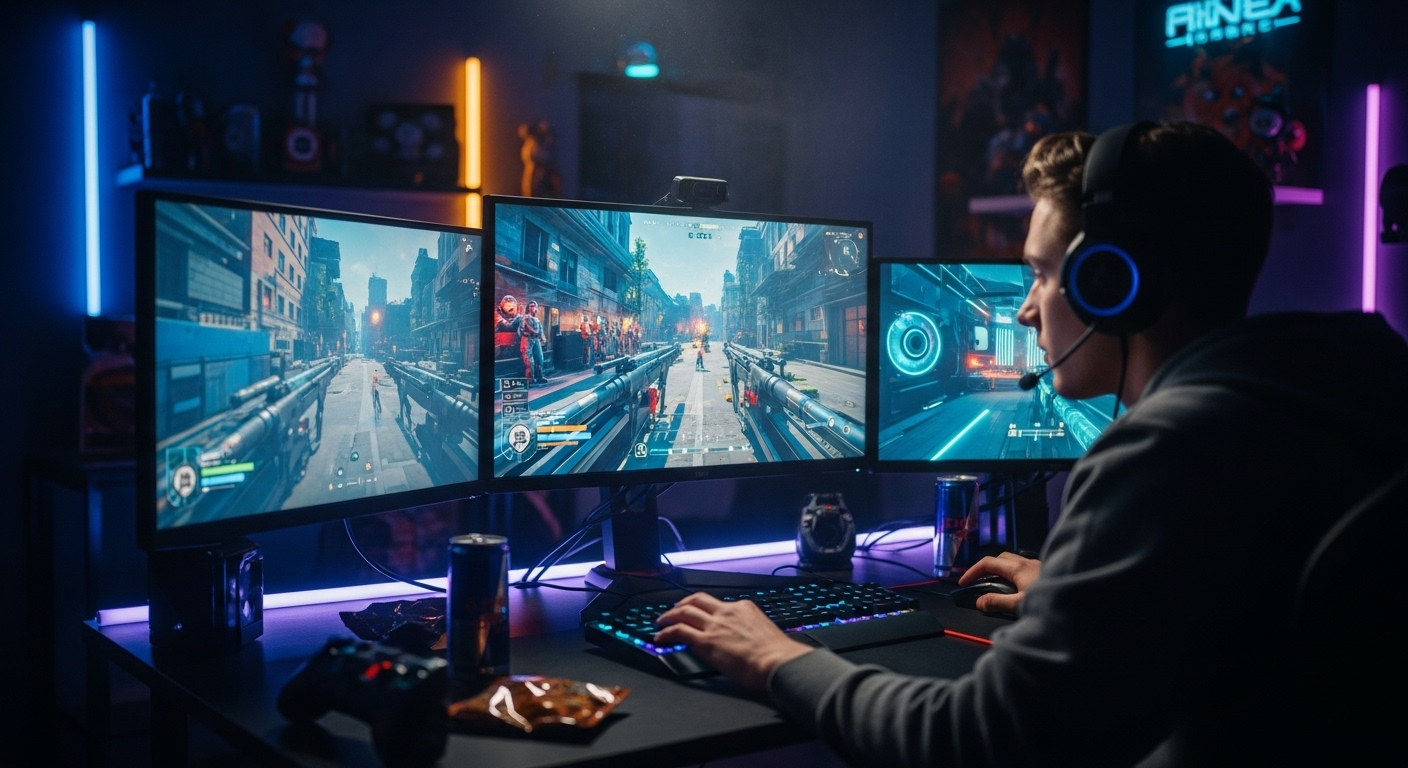
Introduction: Gaming Beyond Entertainment
Gaming has come a long way from its humble beginnings as simple pixelated games played on arcade machines. Today, it is a global phenomenon that transcends age, geography, and culture. Once considered a pastime primarily for children and teenagers, gaming now engages people of all ages and has evolved into an art form, a social platform, and a competitive sport. From mobile games played casually on a commute to sprawling, cinematic experiences on high-end consoles and PCs, gaming has grown into an immersive ecosystem that impacts how we socialize, learn, and even think. Understanding gaming requires recognizing it as more than entertainment—it is a lens through which we can examine technological innovation, social interaction, and cultural evolution.
The Technological Evolution of Gaming
The history of gaming technology reflects the rapid pace of innovation in the digital age. In the 1970s and 1980s, games like Pong, Pac-Man, and Space Invaders offered simple graphics and straightforward gameplay, yet they captured the imagination of players worldwide. The 1990s introduced 3D graphics and more complex gameplay mechanics with consoles like the Nintendo 64 and Sony PlayStation, making gaming more immersive than ever before. Today, gaming integrates high-definition graphics, lifelike animations, artificial intelligence, and expansive open worlds that blur the line between reality and virtual space. Virtual reality and augmented reality technology further enhance immersion, allowing players to experience games in fully interactive environments. This technological evolution has transformed gaming into a medium capable of delivering visually stunning, emotionally engaging, and deeply interactive experiences.
Gaming as a Narrative Experience
Modern gaming is not just about entertainment—it is a powerful storytelling medium. Unlike traditional films or books, video games offer interactive narratives that allow players to influence the story’s outcome. Role-playing games and adventure titles present complex plots with branching paths, giving players agency in shaping their experiences. This interactivity fosters a unique connection between the player and the narrative, enabling exploration of moral dilemmas, emotional decisions, and diverse perspectives. Games such as open-world adventures and narrative-driven experiences have demonstrated that gaming can rival literature and cinema in terms of depth, complexity, and emotional impact. Through these narratives, players are not just observers—they are participants in the story, which deepens engagement and empathy.
The Social Dimension of Gaming
Gaming has evolved into a social phenomenon, connecting millions of players worldwide. Online multiplayer games, social platforms, and cooperative experiences allow people to communicate, collaborate, and compete in real time, regardless of geographical location. Communities form around shared interests in specific games, fostering friendships and social bonds that often extend into the real world. Competitive gaming, or esports, has further expanded the social dimension of gaming by providing a platform for professional players and fans to interact and celebrate skill and achievement. This sense of community underscores gaming’s role as more than a solitary hobby—it is a space for collaboration, mentorship, and cultural exchange.
Cognitive Benefits of Gaming
While gaming is often criticized for its potential negative effects, research has shown that it can also enhance cognitive abilities. Strategy and puzzle games improve problem-solving skills and critical thinking, while fast-paced action games enhance hand-eye coordination, reflexes, and spatial awareness. Simulation and management games develop planning, resource allocation, and organizational skills. Additionally, role-playing and story-driven games encourage empathy and perspective-taking as players navigate complex social interactions and moral choices. When approached responsibly, gaming can be a powerful tool for cognitive development and mental stimulation, offering benefits beyond simple recreation.
The Rise of Esports
Esports has transformed gaming from a leisure activity into a professional pursuit. Competitive gaming tournaments now attract millions of viewers, rivaling traditional sports in popularity and visibility. Professional players earn income through sponsorships, streaming, and tournament winnings, and entire industries have grown around esports, including event organization, coaching, and broadcasting. This professionalization has legitimized gaming as a career path, inspiring aspiring players and offering economic opportunities in diverse areas of the industry. Esports has also created a sense of shared excitement and community, uniting fans and players in celebration of skill, strategy, and competition.
Cultural Impact of Gaming
Gaming has left a significant mark on culture, influencing fashion, music, art, and storytelling. Iconic game characters and narratives have become cultural symbols, and many games explore complex social themes, such as identity, ethics, and diversity. Gaming culture has also given rise to content creation communities, where players share experiences, tutorials, and commentary through streaming platforms and social media. These communities celebrate creativity and collaboration, amplifying gaming’s cultural footprint and integrating it into everyday life. As both an art form and a cultural force, gaming reflects the values, creativity, and concerns of contemporary society.
Challenges in the Gaming World
Despite its many positive aspects, gaming faces significant challenges. Addiction and excessive screen time are ongoing concerns, particularly for younger players. Toxic behavior, harassment, and cyberbullying in online gaming environments can negatively impact mental health and social well-being. Furthermore, monetization strategies, such as microtransactions and loot boxes, have raised ethical questions about fairness and exploitation in games. Addressing these challenges requires responsible game design, player education, and community moderation. By promoting healthy gaming habits and encouraging inclusive, respectful communities, the industry can ensure that gaming continues to be a positive force for entertainment, learning, and connection.
The Future of Gaming
The future of gaming promises even greater innovation and immersion. Cloud gaming is reducing the need for expensive hardware, making high-quality experiences more accessible. Artificial intelligence is improving the realism and responsiveness of non-player characters, creating dynamic and adaptive game worlds. Virtual and augmented reality are pushing the boundaries of immersion, enabling experiences that blend the digital and physical worlds in unprecedented ways. Additionally, gaming is expected to play an increasing role in education and training, offering interactive simulations that enhance learning and problem-solving skills. The trajectory of gaming points toward a future where digital interactivity becomes a core aspect of daily life, shaping culture, education, and entertainment in ways previously unimaginable.
Gaming as an Inclusive Medium
Inclusivity in gaming has gained significant attention in recent years. Developers are designing games that reflect diverse cultures, identities, and experiences, ensuring that players from all backgrounds feel represented. Accessibility features for players with disabilities are becoming more common, allowing broader participation and engagement. This inclusive approach enriches the gaming community, fostering empathy and understanding while providing meaningful experiences to a wider audience. By embracing diversity and accessibility, the gaming industry is creating spaces where everyone can enjoy the immersive, social, and cognitive benefits of interactive play.
Conclusion: Gaming as a Transformative Force
Gaming has evolved from a niche hobby to a multifaceted cultural, social, and technological force. Its technological innovations, immersive storytelling, social connectivity, cognitive benefits, and cultural impact demonstrate its significance beyond entertainment. Gaming allows people to explore new worlds, make meaningful decisions, and connect with others in ways unique to interactive media. As the industry continues to innovate and embrace inclusivity, it will shape society, education, and culture for years to come. Responsible gaming, paired with thoughtful design and community engagement, ensures that the transformative power of gaming can be harnessed for both enjoyment and enrichment, making it one of the defining mediums of the modern era.