Introduction: The Power of Play
Gaming has become one of the most influential cultural and technological phenomena in modern history. What began as simple pixelated entertainment has grown into a global industry worth hundreds of billions of dollars, shaping art, storytelling, social interaction, and even education. For many, gaming is more than a pastime; it is a way to explore new worlds, challenge oneself, and connect with people across the planet.
The story of gaming is a story of creativity, innovation, and imagination. It reflects our desire to build and play within virtual realms that mirror, enhance, and sometimes transcend our own world. Over the decades, gaming has evolved through countless transformations — from arcade cabinets to home consoles, from handheld devices to virtual reality headsets. Today, gaming is not only entertainment but also a platform for culture, competition, and community.
The Birth of Gaming: Where It All Began
The roots of gaming trace back to the early 1950s and 60s, when scientists and engineers experimented with computers that filled entire rooms. Games like Tennis for Two and Spacewar! were among the first electronic games ever created. Though simple by today’s standards, they represented an entirely new kind of interaction — one where humans could play with machines rather than just use them.
By the 1970s, gaming began to take shape as a consumer product. Arcade games such as Pong, Space Invaders, and Pac-Man captivated players worldwide. These early titles were incredibly simple — often just a few pixels bouncing around a screen — but they sparked something powerful. For the first time, play was digital. Competition, fun, and excitement were now available at the touch of a button.
The arcade era defined the first generation of gamers. The flashing lights, sounds of coins dropping, and the joy of beating a high score became iconic. More importantly, it established the foundation for gaming as a social activity. Players gathered around machines, cheering each other on, competing for bragging rights, and forming communities long before online gaming existed.
The Rise of Home Consoles
As technology advanced, the dream of bringing games into people’s homes became reality. The late 1970s and early 1980s saw the birth of home consoles like the Atari 2600 and later, the Nintendo Entertainment System (NES). These consoles revolutionized entertainment, allowing players to experience gaming without leaving the house.
Titles like Super Mario Bros., The Legend of Zelda, and Metroid not only entertained but also introduced the concept of storytelling in games. For the first time, players could go on epic adventures, explore vast digital worlds, and experience emotional narratives. This marked a shift from simple score-based challenges to immersive journeys that engaged both the mind and the heart.
By the 1990s, gaming had exploded into a cultural force. The introduction of 3D graphics brought a new dimension to gameplay. Games like Super Mario 64, Final Fantasy VII, and The Legend of Zelda: Ocarina of Time changed the industry forever. Consoles such as the PlayStation and Nintendo 64 became household names, and the idea of gaming as a legitimate form of art began to take root.
The Dawn of PC Gaming and the Internet Age
While consoles ruled the living rooms, personal computers became another powerful platform for gaming. The 1990s and early 2000s saw the rise of PC titles that offered deeper mechanics, modding capabilities, and online multiplayer experiences. Games like Doom, Half-Life, Warcraft, and The Sims demonstrated that PCs could offer complex and diverse gaming experiences far beyond what consoles could handle at the time.
Perhaps the most revolutionary development in gaming history came with the rise of the internet. Suddenly, players could connect with others from across the world. Online gaming gave birth to genres like the Massively Multiplayer Online Role-Playing Game (MMORPG), popularized by titles such as EverQuest and World of Warcraft.
This was the beginning of gaming as a global community. Clans, guilds, and online friendships flourished. Players were no longer isolated; they were part of vast digital societies. The internet also paved the way for competitive gaming and esports, laying the groundwork for a new kind of spectator entertainment that would explode in the following decades.
The Golden Age of Gaming: Innovation and Diversity
As the 2000s rolled on, gaming entered what many call its golden age. The technology leaped forward with high-definition graphics, cinematic storytelling, and expansive open worlds. Games were no longer just about gameplay; they were experiences. Titles like The Elder Scrolls V: Skyrim, Grand Theft Auto V, Mass Effect, and The Witcher 3 proved that games could rival movies in narrative depth and emotional impact.
This period also saw the diversification of gaming platforms. Consoles such as the PlayStation 3, Xbox 360, and Nintendo Wii each carved out their own identities. The Wii, for example, brought motion controls to the mainstream, allowing families and casual players to enjoy gaming in new ways. Meanwhile, mobile phones began to emerge as a gaming platform, introducing casual hits like Angry Birds, Candy Crush, and Temple Run.
The diversity of games exploded as independent developers entered the scene. The rise of digital distribution allowed small studios to publish games without the backing of major publishers. Indie games like Minecraft, Undertale, and Celeste proved that creativity and heart could outshine massive budgets. The gaming world became more democratic, more diverse, and more inclusive than ever before.
The Rise of Esports and Streaming Culture
One of the most fascinating evolutions in gaming has been the transformation of play into performance. What began as casual competition among friends evolved into esports — organized, professional competitive gaming with millions of fans worldwide.
Games like League of Legends, Dota 2, Counter-Strike: Global Offensive, and Fortnite have built massive ecosystems of players, teams, and spectators. Esports tournaments fill entire stadiums, with millions watching online. The players have become celebrities, earning sponsorships, fame, and even international recognition.
Alongside esports, streaming platforms gave rise to a new form of entertainment: watching others play. Services like Twitch and YouTube Gaming have turned individual gamers into influencers and entertainers. Streamers not only showcase gameplay but also build communities through humor, commentary, and personal connection. Gaming has become as much about social interaction as it is about play.
This merging of gaming, entertainment, and community has redefined what it means to be a gamer. Today, people can enjoy games by playing them, watching them, or even creating content about them. The lines between player, creator, and audience are blurred, and gaming culture continues to expand in unexpected directions.
The Emotional Side of Gaming
Beyond the competition and technology, gaming has evolved into a powerful medium for storytelling and emotional expression. Games can make players laugh, cry, reflect, and even heal. They allow players to inhabit the roles of heroes, villains, explorers, and survivors.
Titles like Journey, Life is Strange, The Last of Us, and Red Dead Redemption 2 showcase the emotional depth that interactive storytelling can achieve. Through music, visuals, and player choice, games create moments that stay with us long after we’ve put down the controller.
Moreover, gaming has become a source of comfort for many. It offers escape, creativity, and connection. During difficult times — such as global crises or personal struggles — players often find solace in digital worlds where they can be anyone and go anywhere. Gaming communities can provide friendship, empathy, and a sense of belonging that transcends physical distance.
The Technological Revolution: Virtual and Augmented Realities
As technology continues to advance, gaming keeps pushing boundaries. Virtual Reality (VR) and Augmented Reality (AR) have opened new frontiers of immersion. With VR headsets, players can step directly into their favorite worlds, experiencing games from a first-person perspective that feels incredibly real.
Titles like Beat Saber, Half-Life: Alyx, and No Man’s Sky VR demonstrate how VR can transform gameplay into a fully embodied experience. Meanwhile, AR games like Pokémon GO merge the digital and physical worlds, turning everyday environments into playgrounds.
These innovations are just the beginning. With advances in AI, cloud computing, and haptic technology, the line between reality and virtuality continues to blur. In the future, we may not just play games — we may live inside them, crafting experiences that respond to our emotions, voices, and even our thoughts.
The Social Impact of Gaming
Gaming’s influence reaches far beyond entertainment. It has shaped modern culture, education, and even mental health. Schools use game-based learning to teach complex subjects in engaging ways. Therapists use gaming to help patients build social skills, manage anxiety, or recover motor function.
Socially, gaming has connected millions across the world. Online communities, forums, and multiplayer games bring together people from different cultures and backgrounds. Friendships and relationships often form through shared gaming experiences. In many ways, gaming is one of the most inclusive social spaces on Earth — one that values collaboration, creativity, and passion over physical or geographical barriers.
However, gaming also faces challenges, including toxicity, addiction, and accessibility issues. Developers and communities are increasingly focused on creating safer, more welcoming spaces. The push for representation and inclusivity in gaming narratives has also grown, ensuring that players of all backgrounds can see themselves reflected in the worlds they explore.
Mobile Gaming and the Casual Revolution
One of the most significant transformations in the past decade has been the explosion of mobile gaming. With smartphones becoming nearly universal, gaming is now accessible to virtually everyone. Mobile games appeal to both hardcore and casual players, offering quick, easy entertainment on the go.
Titles like Clash of Clans, PUBG Mobile, and Genshin Impact have shown that mobile gaming can be both profitable and deeply engaging. The mobile platform has also introduced millions of new players to gaming who may never have owned a console or gaming PC.
While some critics argue that mobile gaming lacks depth, others point out that it has democratized gaming more than any other platform. It has opened the door for innovation, allowing developers to reach global audiences with unique ideas and creative gameplay.
The Future of Gaming: Where Do We Go From Here?
As we look ahead, the future of gaming seems limitless. Artificial intelligence promises to create smarter NPCs and adaptive storylines that change based on player behavior. Cloud gaming services are eliminating the need for expensive hardware, allowing anyone with an internet connection to experience high-end games.
The concept of the metaverse — a shared, persistent digital universe — continues to gain traction. In such worlds, players could seamlessly move between games, social spaces, and work environments. The boundaries between gaming and real life may soon blur even further, creating entirely new forms of expression and interaction.
Moreover, as technology becomes more sustainable and accessible, the gaming community will continue to grow. Diversity in game development will bring fresh perspectives and stories to the forefront, enriching the medium as a whole.
One thing is certain: gaming will continue to evolve, inspire, and unite. It has transcended its early identity as mere entertainment and become a global culture — one that reflects the creativity, curiosity, and complexity of humanity itself.
Conclusion: The Infinite Game
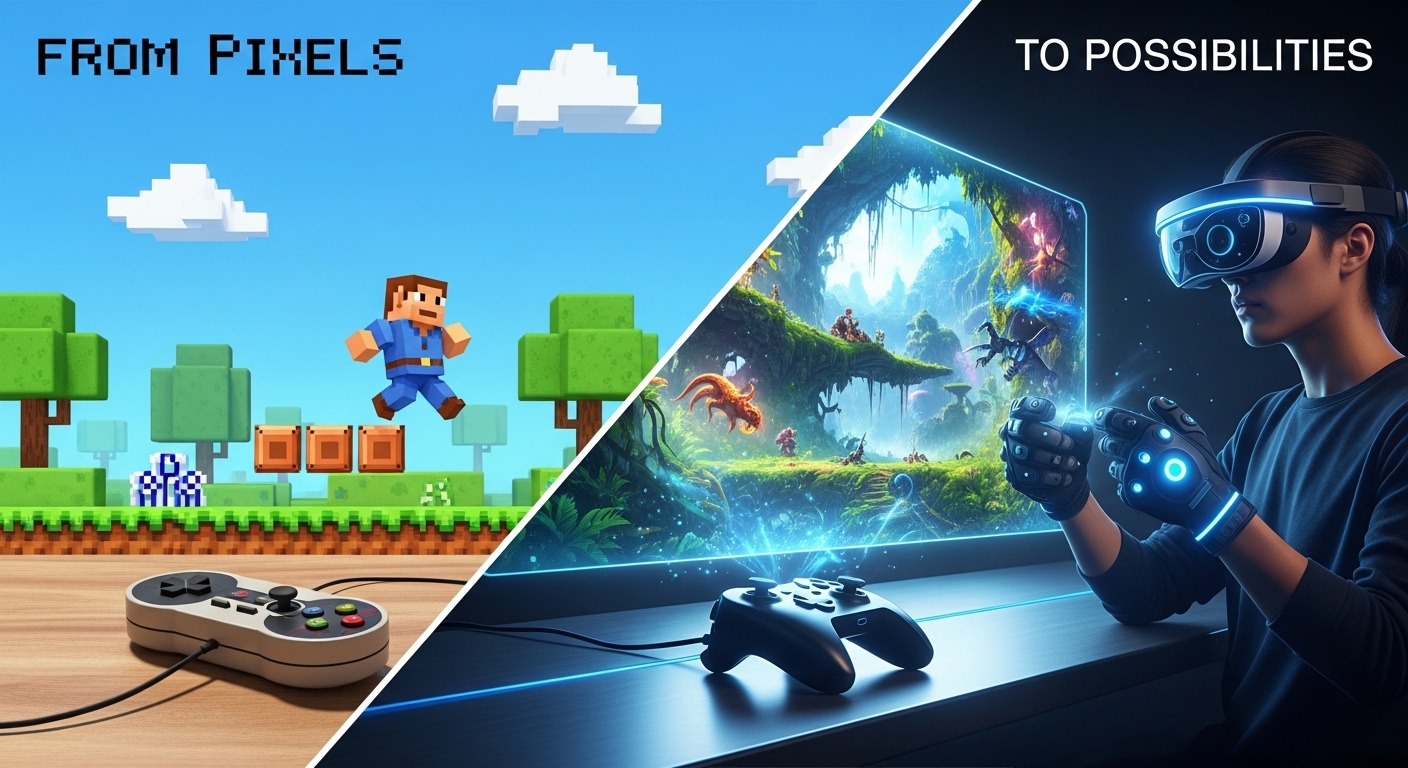
From its humble beginnings in arcades to the breathtaking virtual worlds of today, gaming has come a long way. It has transformed not only technology but also art, communication, and human connection. Every generation of gamers builds upon the last, pushing the boundaries of what’s possible and redefining what it means to play.
In gaming, there are no limits — only new worlds waiting to be discovered. Whether you’re a casual player exploring your favorite mobile game or a competitive gamer chasing victory on the global stage, you are part of a vast, ever-growing community shaped by imagination and passion.
The story of gaming is still being written, and it is a story without an end — because play is timeless. As long as humans dream, there will always be new games to play, new worlds to explore, and new adventures to share.