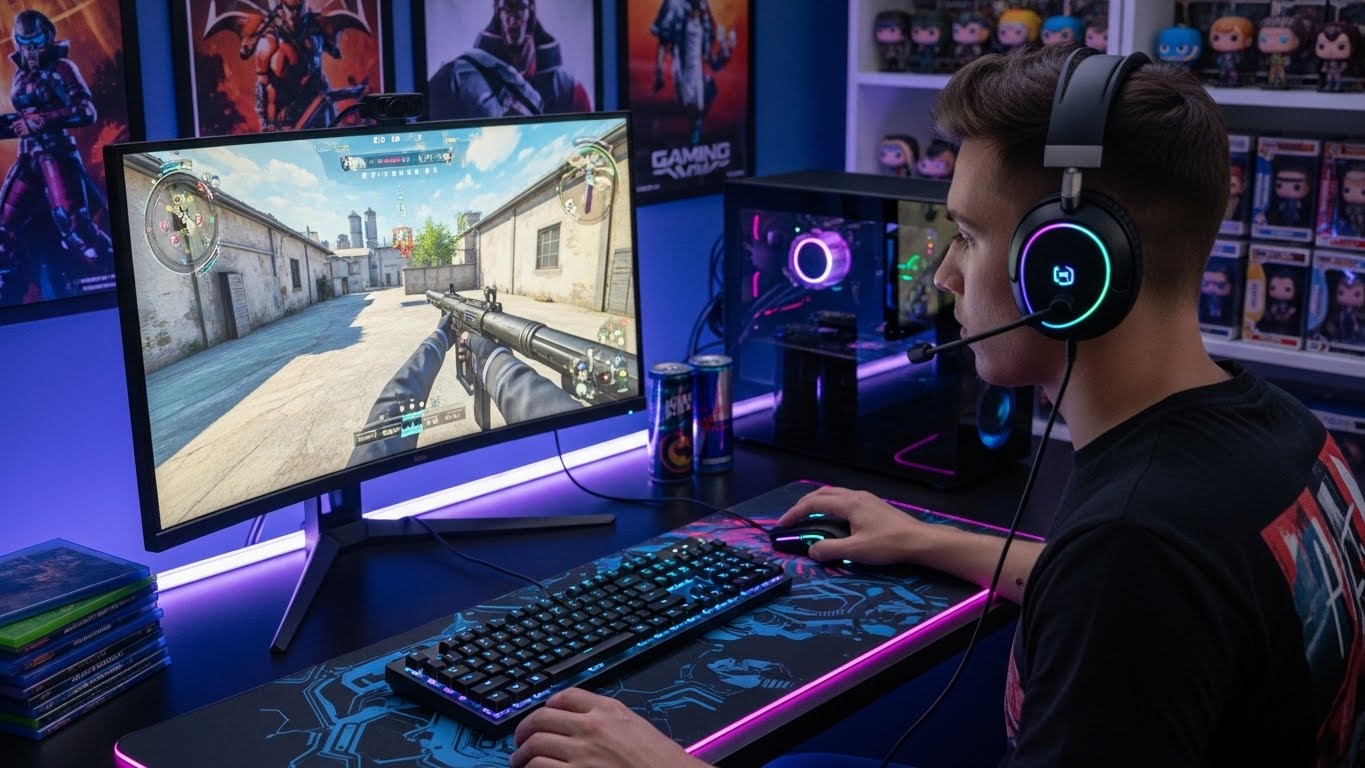
Introduction: The Modern Age of Play
Gaming has grown from a niche pastime into one of the most influential forces in global culture. It transcends entertainment and serves as a bridge between technology, art, and human creativity. What once started as simple pixels on a screen has now evolved into immersive virtual worlds filled with complex stories, emotional experiences, and endless possibilities. Gaming is not just about play anymore—it is about expression, competition, learning, and connection.
The Origins of Gaming: From Simplicity to Digital Wonder
Long before the digital revolution, games were a fundamental part of human culture. Ancient civilizations played board games like Chess and Go, using strategy and intellect to entertain and challenge one another. With the advancement of technology, the concept of play found a new home on digital platforms.
The first video games appeared in the 1950s and 1960s when scientists began experimenting with computer simulations. Games like Pong and Spacewar! marked the birth of interactive entertainment. Although these early creations were simple in design, they introduced the world to a new form of engagement that would eventually transform global entertainment.
The Rise of the Console Generation
The late 1970s and 1980s were a defining period for gaming. The introduction of home consoles such as the Atari 2600, Nintendo Entertainment System, and Sega Genesis brought video games into living rooms across the world. Iconic titles like Super Mario Bros., The Legend of Zelda, and Sonic the Hedgehog became household names, shaping the identity of a generation.
These games were more than mere entertainment; they were cultural milestones. They introduced players to worlds filled with imagination, adventure, and storytelling. Gaming became a shared experience, uniting friends and families in joyful competition and exploration. The console generation laid the foundation for the vibrant industry we know today.
The Technological Leap: From 2D to 3D Worlds
As technology advanced, so did the scope of gaming. The 1990s brought a major transformation with the shift from two-dimensional graphics to fully realized 3D environments. This evolution revolutionized gameplay and storytelling. Titles such as Final Fantasy VII, Metal Gear Solid, and Tomb Raider offered cinematic narratives and lifelike experiences that immersed players deeper than ever before.
This era also introduced groundbreaking consoles like the PlayStation, Nintendo 64, and Dreamcast, which expanded the possibilities of visual design, sound quality, and interactive gameplay. The 3D revolution gave birth to open worlds, complex character development, and emotional storytelling, establishing gaming as a legitimate art form.
Online Gaming: Connecting the World Through Play
The introduction of the internet forever changed the landscape of gaming. The ability to connect players across the globe redefined how games were played, shared, and experienced. Multiplayer titles allowed people from different continents to collaborate or compete in real time.
Games like Counter-Strike, World of Warcraft, and Call of Duty became global sensations, bringing together millions of players in massive online communities. This new era gave rise to social gaming, where interaction and teamwork became as important as skill and strategy. The online revolution transformed gaming into a powerful platform for communication and connection.
Mobile Gaming: Entertainment in Your Pocket
The invention of smartphones brought gaming to the fingertips of billions. Mobile gaming democratized play by making it accessible to everyone, regardless of age or experience. Simple yet engaging titles like Candy Crush and Temple Run attracted casual players, while complex strategy and role-playing games offered depth for seasoned gamers.
This portability allowed gaming to fit seamlessly into daily life. Whether during a commute or a break, players could immerse themselves in virtual worlds at any moment. The mobile gaming industry now stands as one of the largest sectors of global entertainment, proving that innovation and accessibility can coexist to create universal appeal.
Gaming as an Art Form
Over the years, gaming has evolved into a legitimate form of artistic expression. Developers now use visuals, sound, and narrative design to evoke emotion and convey complex ideas. Games like Journey, The Last of Us, and Red Dead Redemption have demonstrated that video games can tell stories with the same depth and emotional impact as films or literature.
Artistic direction has become an essential part of the gaming experience. From the hand-drawn beauty of indie titles to the breathtaking realism of modern blockbusters, every visual element is carefully crafted to immerse players in the story. Music and sound design also play a critical role, enhancing mood and creating unforgettable moments that resonate long after the game ends.
The Psychology of Play: Why We Love Games
Gaming taps into some of the deepest aspects of human psychology. At its core, it satisfies the need for achievement, challenge, and discovery. The sense of progression—whether through completing a level, earning a reward, or mastering a skill—triggers feelings of accomplishment and joy.
Moreover, gaming offers a unique escape from reality. It allows players to step into different roles, explore imaginary worlds, and experience situations beyond ordinary life. This immersion not only entertains but also fosters creativity, problem-solving, and adaptability. The interactivity of gaming makes it a deeply personal and emotionally engaging experience.
Esports: When Gaming Became a Global Sport
What once began as friendly competition among friends has evolved into a worldwide professional industry. Esports, or electronic sports, represent the competitive side of gaming where skilled players and teams compete for fame, sponsorships, and million-dollar prizes.
Games such as League of Legends, Dota 2, and Fortnite have become the centerpiece of international tournaments that attract audiences comparable to traditional sports. Esports athletes train rigorously, mastering reflexes, strategy, and teamwork. This phenomenon has not only elevated gaming’s cultural status but also created new career paths and communities built around competition and excellence.
Community and Connection: The Social Side of Gaming
One of the most remarkable aspects of gaming is its ability to connect people. Online communities, forums, and streaming platforms have turned gaming into a shared social experience. Players bond over strategies, achievements, and mutual passion, forming friendships that span across borders.
Multiplayer games encourage collaboration and communication, fostering teamwork and mutual respect. Cooperative gameplay strengthens relationships, while competitive matches teach sportsmanship and resilience. In an increasingly digital world, gaming serves as a bridge that unites individuals through shared creativity and fun.
The Educational and Therapeutic Power of Gaming
Beyond entertainment, gaming has proven to be a powerful educational and therapeutic tool. Many schools use interactive games to teach subjects like mathematics, history, and science, making learning more engaging and effective. Strategy and simulation games help develop problem-solving, decision-making, and analytical thinking.
In healthcare, games are used for therapy and rehabilitation. They can improve motor skills, relieve stress, and aid in cognitive development. For patients dealing with anxiety or trauma, gaming offers a safe space for emotional expression and healing. This ability to blend enjoyment with education and therapy showcases the positive potential of the medium.
Challenges and Responsibilities in the Gaming World
Despite its success, the gaming industry faces several challenges. Issues like addiction, online toxicity, and data privacy have sparked debates about player safety and responsible gaming. Developers and communities are increasingly promoting healthier gaming habits and building inclusive spaces for all players.
Representation and diversity also remain key concerns. Modern games are gradually becoming more inclusive, featuring diverse characters and stories that reflect the real world. Developers are now recognizing the importance of representation, ensuring that players from all backgrounds can see themselves in the games they play.
The Future of Gaming: A World Without Limits
The future of gaming is boundless. With the rise of virtual reality, augmented reality, and artificial intelligence, the line between the real and digital worlds continues to blur. Players can now step directly into the game, experiencing environments with lifelike precision and sensory immersion.
Cloud gaming is revolutionizing accessibility, allowing players to stream high-quality games without expensive hardware. Artificial intelligence is creating smarter opponents, adaptive worlds, and personalized experiences tailored to each player’s style. The future promises gaming experiences that are more dynamic, inclusive, and interconnected than ever before.
The Cultural Influence of Gaming
Gaming has become one of the most significant cultural forces of the 21st century. It influences music, fashion, film, and even education. Characters like Mario, Lara Croft, and Kratos are more than fictional icons—they are symbols of creativity and evolution. Gaming has inspired movies, literature, and even social movements, proving its power to shape global culture.
Moreover, gaming events and conventions celebrate creativity, diversity, and innovation. These gatherings showcase how gaming unites people under a shared love for imagination and storytelling. The cultural reach of gaming continues to expand, making it a cornerstone of modern entertainment.
Conclusion: The Endless Journey of Play
Gaming has transformed from a simple pastime into a complex, multifaceted universe that reflects human creativity and innovation. It has changed the way people think, connect, and express themselves. From the earliest pixelated adventures to the breathtaking realism of modern virtual worlds, gaming has continually evolved, pushing the boundaries of what is possible.
The beauty of gaming lies in its infinite potential. It brings people together, inspires imagination, and gives players the freedom to explore, create, and dream. As technology continues to advance, the world of gaming will grow even richer, offering experiences that challenge, inspire, and unite. The journey of play is far from over—it is an ever-expanding realm of endless discovery, where imagination knows no limits and every player holds the power to shape their own world.