Introduction
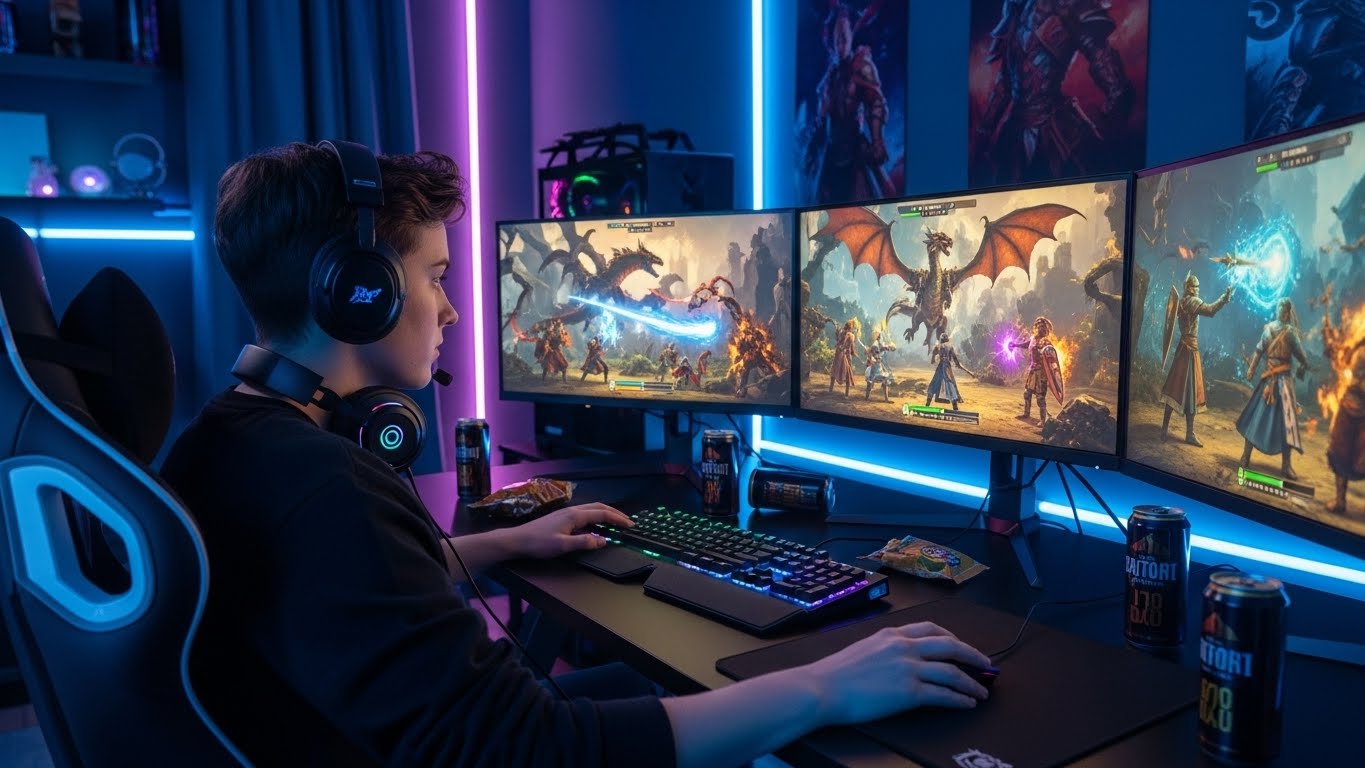
Gaming has transformed from a niche hobby into a global cultural phenomenon. What was once confined to arcades and home consoles has expanded into a multi-billion-dollar industry that influences technology, storytelling, social interaction, and even education. Today, gaming is not just a pastime; it is a lifestyle, a career path, and a source of artistic expression. This blog explores the world of gaming, examining its evolution, its impact on society, the technological advancements driving it, and the unique experiences it offers to millions of players around the globe.
The Evolution of Gaming
Gaming began as a simple form of entertainment with games like Pong and Space Invaders, offering basic mechanics and pixelated graphics. Over the decades, it has evolved into a sophisticated medium with immersive worlds, complex narratives, and cutting-edge technology. From the 8-bit era to modern high-definition graphics and realistic physics engines, the journey of gaming reflects not just technical progress but also a deepening understanding of player engagement.
The evolution of gaming is also marked by genre expansion. Early games were primarily action-oriented, but today’s titles span adventure, role-playing, simulation, strategy, and more. Developers now cater to diverse audiences, ensuring that everyone can find a game that resonates with their preferences. This diversification has helped gaming appeal to all ages, genders, and cultural backgrounds, transforming it into a universal language of fun and creativity.
Gaming as a Social Experience
Gaming is no longer a solitary activity. Online multiplayer games have turned gaming into a social experience, allowing players to connect with friends and strangers worldwide. Competitive esports tournaments attract millions of viewers, creating communities of fans who celebrate achievements, strategies, and personalities. Social interaction in gaming extends beyond just gameplay. Platforms and forums allow players to discuss tips, share fan art, and form lasting friendships.
Streaming has also played a significant role in making gaming a communal experience. Gamers can broadcast their sessions, providing entertainment while connecting with an audience. This interaction fosters a sense of belonging, as viewers feel like they are part of the gaming journey. For many, these social connections are as meaningful as the game itself.
The Psychology Behind Gaming
Gaming engages the brain in ways that are both stimulating and rewarding. It challenges problem-solving skills, enhances strategic thinking, and improves hand-eye coordination. Games with complex narratives and branching storylines also foster emotional investment, encouraging players to explore moral choices and ethical dilemmas.
The concept of flow is central to understanding gaming’s appeal. Players often lose track of time because they are fully immersed in challenges that balance skill and difficulty. This state of deep focus provides a unique form of relaxation, combining excitement with mental engagement. Additionally, games offer a safe space to explore identities, experiment with decision-making, and express creativity without real-world consequences.
Technological Advancements Driving Modern Gaming
The rise of modern gaming has been fueled by rapid technological innovation. Graphics engines produce breathtaking visuals, AI creates responsive and challenging opponents, and cloud gaming allows players to access games without high-end hardware. Virtual reality and augmented reality have introduced immersive experiences where players feel as if they are inside the game world.
Mobile gaming has also transformed accessibility. Smartphones have made gaming portable, allowing millions of people to play anytime, anywhere. This has led to the emergence of casual games that are easy to learn but challenging to master, broadening the appeal of gaming to audiences who may not identify as traditional gamers.
Gaming and Storytelling
One of the most remarkable aspects of modern gaming is its ability to tell compelling stories. Video games now rival literature and cinema in narrative complexity. Players can explore intricate worlds, form emotional bonds with characters, and experience stories that adapt to their choices. Role-playing games, in particular, offer branching narratives where every decision can alter the outcome, giving players a sense of agency and investment rarely found in other entertainment mediums.
Storytelling in gaming also reflects cultural diversity. Games often explore global myths, historical events, and social issues, allowing players to gain insight into different perspectives. This narrative richness elevates gaming from mere entertainment to an art form that engages the mind, heart, and imagination.
The Economic Impact of Gaming
Gaming has grown into a major economic force. The industry generates billions of dollars annually through game sales, in-game purchases, merchandise, and esports events. This economic impact extends to job creation, including roles in game development, graphic design, marketing, content creation, and event management.
Independent developers also benefit from the democratization of game publishing. Digital storefronts allow small studios and solo creators to release games worldwide without traditional corporate backing. This has led to a surge in creativity, as innovative gameplay mechanics and unique stories reach audiences that were once inaccessible.
Esports: Gaming as a Competitive Arena
Esports has transformed gaming into a spectator sport with global reach. Professional players train rigorously, compete in international tournaments, and earn substantial incomes from sponsorships and winnings. Esports has also cultivated a dedicated fan base, with live streams, commentary, and community engagement creating a vibrant ecosystem.
The growth of esports has implications beyond entertainment. It has legitimized gaming as a career, challenged stereotypes about gamers, and demonstrated that video games require skill, strategy, and dedication comparable to traditional sports. Colleges and universities now offer esports scholarships, highlighting the educational and professional opportunities within this field.
The Role of Music and Sound Design
Sound is a critical component of gaming that enhances immersion and emotional impact. Musical scores set the tone, evoke emotions, and guide player experiences. Sound effects provide feedback, alert players to threats, and create a sense of realism. Advanced audio technology, including 3D sound and spatial audio, allows players to detect the direction of footsteps, gunfire, or environmental cues, enriching gameplay and strategy.
The integration of music and sound in gaming has also influenced popular culture. Iconic soundtracks and theme songs from games often achieve mainstream recognition, demonstrating the cultural resonance of these audio elements.
Gaming and Education
Beyond entertainment, gaming has found applications in education and skill development. Educational games teach problem-solving, critical thinking, language skills, and history in engaging ways. Simulations allow students to practice real-world skills, such as surgery or engineering concepts, in a risk-free environment.
Gamification, the use of game elements in non-gaming contexts, has also become a popular tool in workplaces and schools. By incorporating rewards, challenges, and progression systems, organizations can increase motivation, engagement, and learning outcomes. Gaming has thus proven to be not only fun but also highly practical.
The Cultural Significance of Gaming
Gaming has evolved into a cultural touchstone that reflects and shapes societal trends. Games explore identity, morality, and social issues, often sparking discussions about ethics, representation, and inclusivity. Communities form around shared interests, creating spaces for dialogue, creativity, and activism.
Gaming culture also intersects with fashion, art, and media, influencing mainstream trends. Cosplay, fan art, and game-inspired music illustrate how gaming inspires creativity beyond the screen. These cultural interactions highlight the broader impact of gaming as a force for expression and connection.
The Future of Gaming
The future of gaming promises even more innovation and immersion. Advances in artificial intelligence, cloud computing, virtual reality, and augmented reality will create experiences that blur the lines between fiction and reality. Games will continue to become more personalized, adaptive, and socially interactive, offering unique experiences for every player.
The growth of cross-platform gaming, inclusivity in design, and global collaboration will further solidify gaming as a universal form of entertainment. As technology and creativity converge, gaming will expand its influence across culture, education, and art, continuing to redefine what entertainment can be.
Conclusion
Gaming is far more than a hobby; it is a dynamic, evolving medium that engages the mind, sparks creativity, and fosters connection. From immersive narratives and competitive esports to educational applications and cultural influence, gaming has established itself as a cornerstone of modern entertainment. Its impact reaches beyond the screen, shaping society, technology, and culture in ways previously unimaginable. As the industry continues to grow and innovate, gaming will remain a powerful force, redefining entertainment and offering experiences that captivate millions worldwide.
Gaming is no longer just about playing—it is about living, learning, and connecting in a virtual world that mirrors the complexity and wonder of our own reality.