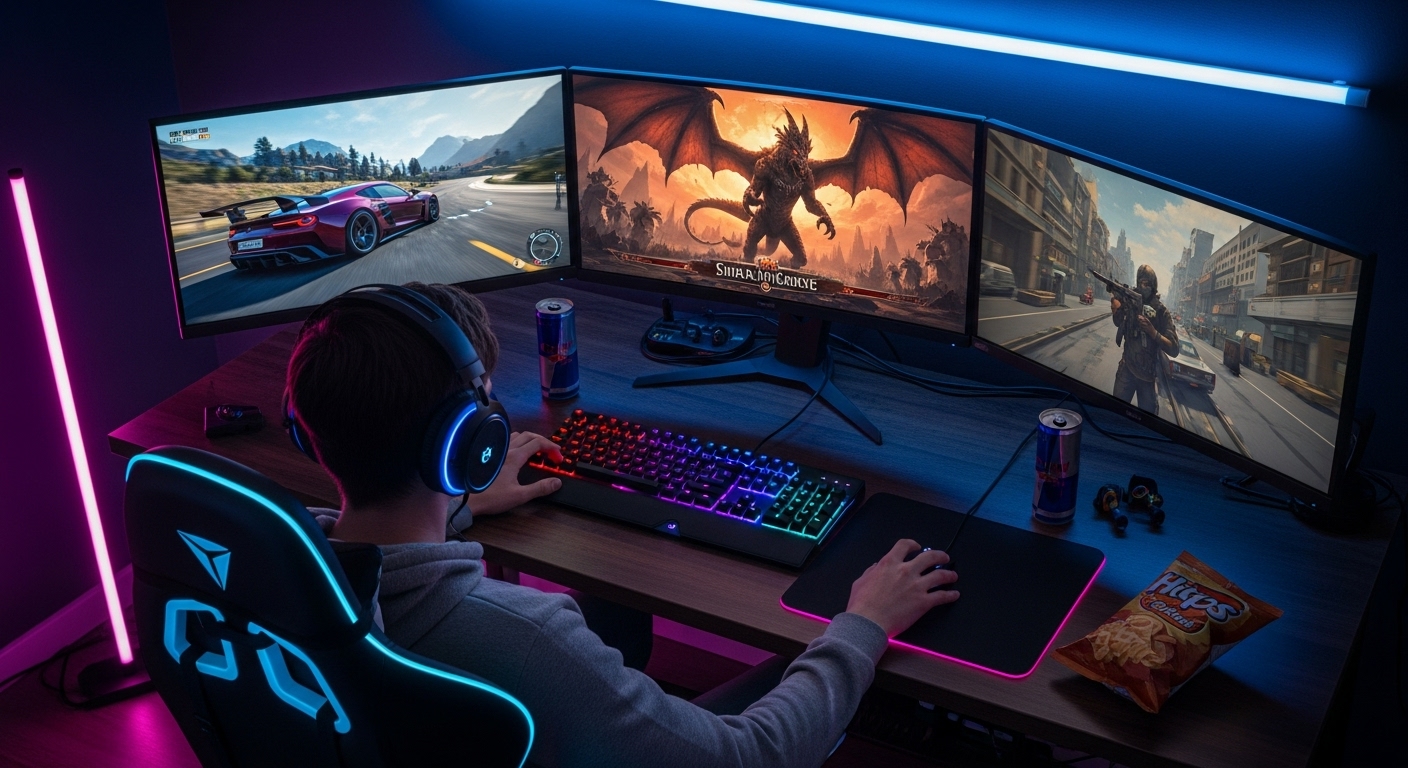
Gaming has come a long way since its humble beginnings, evolving from simple pixelated screens to vast, immersive worlds that feel as real as life itself. As technology has advanced, so too has the scope of gaming, allowing players to experience virtual worlds in ways that were once unimaginable. From arcades to virtual reality, the journey of gaming is one filled with innovation, creativity, and passion. In this blog post, we will explore the history, impact, and future of gaming, shedding light on the factors that have shaped it into the global phenomenon it is today.
The Birth of Gaming: A Pixelated Beginning
In the late 20th century, the idea of electronic entertainment was a novelty. The first video game, Tennis for Two, was created in 1958 by physicist William Higinbotham. While it was a simple two-player tennis simulation on an oscilloscope screen, it marked the beginning of a new form of entertainment. It wasn’t until 1972 that the gaming industry truly began to take shape with the release of Pong, the iconic arcade game by Atari. This game, a basic table tennis simulation, quickly became a cultural phenomenon and introduced the world to the concept of video gaming.
In the years that followed, arcade games such as Space Invaders (1978) and Pac-Man (1980) further solidified gaming as a mainstream activity. People flocked to arcades to compete for high scores, and gaming became a social experience. However, the gaming world was still far from the immersive experiences we have today, with graphics limited to basic shapes and simplistic animations.
The Rise of Consoles: Bringing Gaming Home
As arcade games became more popular, it was clear that there was a growing demand for home entertainment systems. In the late 1970s and early 1980s, video game consoles such as the Atari 2600 and the Nintendo Entertainment System (NES) were released, bringing gaming to the living room. The NES, in particular, revolutionized the industry by introducing a library of iconic games, including Super Mario Bros. and The Legend of Zelda. These games showcased the potential of video games as an art form, combining storytelling, gameplay mechanics, and visual design.
The 1980s also marked the rise of home computers like the Commodore 64 and the Amiga. These systems were capable of running more complex games with better graphics and sound, paving the way for the more advanced gaming experiences we enjoy today. The 1983 video game crash, which was caused by an oversaturation of the market, nearly wiped out the industry, but it also forced developers to rethink their strategies, leading to a period of innovation and improvement.
3D Graphics and the Birth of the Modern Era
The 1990s were a transformative decade for gaming, as the industry began to embrace 3D graphics. The release of the Sony PlayStation in 1994 and the Nintendo 64 in 1996 marked the beginning of a new era in gaming. These consoles were able to render 3D environments, allowing for more dynamic and realistic gameplay. The success of games like Super Mario 64 and Final Fantasy VII showed the world the potential of 3D gaming, and it was clear that the future of gaming was moving in this direction.
At the same time, personal computers were becoming more powerful, and games like Doom and Warcraft pushed the boundaries of what was possible in terms of graphics and multiplayer experiences. The growth of the internet also played a crucial role in the evolution of gaming, allowing players to connect with others around the world and participate in online multiplayer games. This shift laid the groundwork for the multiplayer-focused games that dominate the industry today.
The Mobile Gaming Revolution
While consoles and PCs continued to dominate the gaming landscape, a new revolution was brewing in the early 2000s. The rise of smartphones, particularly the Apple iPhone, brought gaming to a wider audience than ever before. Mobile gaming, once seen as a niche activity, exploded in popularity, with millions of people downloading games on their phones and tablets.
Games like Angry Birds, Candy Crush Saga, and Pokémon GO became global sensations, attracting players of all ages and backgrounds. Mobile gaming also democratized gaming by making it more accessible. Now, you didn’t need an expensive console or high-end computer to enjoy a gaming experience; all you needed was a smartphone. This shift significantly expanded the audience for video games, with mobile gaming accounting for a significant portion of the global gaming market.
The Rise of Esports: Competitive Gaming
As gaming grew in popularity, it began to evolve into a more competitive and professional pursuit. The rise of online multiplayer games like Counter-Strike, League of Legends, and Dota 2 helped fuel the growth of esports—the professional competitive gaming industry. Esports has transformed gaming into a legitimate sport, with professional players, teams, and tournaments attracting millions of viewers and offering significant cash prizes.
Esports tournaments like the League of Legends World Championship and The International for Dota 2 now draw massive audiences, both online and in person. These events are broadcast on platforms like Twitch and YouTube, and many professional gamers have built large followings, becoming celebrities in their own right. Esports has also led to the creation of gaming scholarships and career opportunities, allowing young players to pursue their passion professionally.
Virtual Reality: The Next Frontier
As technology continues to advance, virtual reality (VR) has emerged as the next frontier for gaming. VR offers a truly immersive experience, allowing players to step inside the game world and interact with it in ways that traditional gaming cannot. The release of VR headsets like the Oculus Rift and HTC Vive in the mid-2010s marked the beginning of a new era of gaming, one that promises to revolutionize how we play.
While VR gaming is still in its infancy, it holds immense potential. Games like Beat Saber and Half-Life: Alyx showcase the capabilities of VR, offering an experience that feels almost like stepping into a different reality. However, despite its promise, VR gaming still faces challenges, such as the need for more advanced hardware, higher-resolution displays, and more engaging content. As technology continues to improve, VR gaming could very well become the dominant form of gaming in the future.
The Future of Gaming: What’s Next?
Looking ahead, the future of gaming is incredibly exciting. The next few decades promise to bring even more innovation, with advancements in artificial intelligence (AI), machine learning, and cloud gaming shaping the industry. AI-driven games will become more sophisticated, with NPCs (non-playable characters) exhibiting more realistic behaviors and dynamic storylines that adapt to the player’s actions.
Cloud gaming, which allows players to stream games directly from the internet without needing expensive hardware, is also set to revolutionize the industry. Services like Google Stadia, NVIDIA GeForce Now, and Xbox Cloud Gaming are already changing the way people play, making gaming more accessible than ever before. With cloud gaming, players can enjoy high-quality games on any device, whether it’s a smartphone, tablet, or low-end computer, without the need for powerful hardware.
Another area of growth is in the realm of augmented reality (AR). Unlike VR, which immerses the player in a completely virtual world, AR overlays digital elements onto the real world. Games like Pokémon GO have already shown the potential of AR gaming, and we can expect to see more titles that combine the real and virtual worlds in creative ways.
Moreover, the integration of blockchain technology and non-fungible tokens (NFTs) into gaming is a trend to watch. While controversial, blockchain has the potential to create new economic models within games, allowing players to own and trade in-game assets in a decentralized manner.
The Cultural Impact of Gaming
Gaming is not just a form of entertainment; it has become a cultural phenomenon. It shapes how we socialize, how we tell stories, and even how we view the world around us. Games like The Last of Us and Red Dead Redemption 2 have garnered praise for their deep, emotional narratives, demonstrating that games can be as impactful as films or books.
Additionally, gaming communities have become central hubs for social interaction. Online multiplayer games foster collaboration and competition, with players forming lasting friendships and communities that extend beyond the game itself. Platforms like Twitch and Discord have further amplified this sense of community, allowing gamers to interact, share experiences, and support one another in real time.
Conclusion: Gaming as a Global Phenomenon
From humble beginnings to a global industry worth billions of dollars, gaming has evolved into a central pillar of modern entertainment. The technological advancements in graphics, gameplay, and interactivity have made video games a powerful medium for storytelling, socializing, and exploring new worlds. Whether you’re playing on a console, PC, or mobile device, gaming has something for everyone.
As we look to the future, the possibilities for gaming are limitless. With the rise of VR, AI, cloud gaming, and other emerging technologies, the next generation of games will continue to push the boundaries of what’s possible, offering experiences that are more immersive and exciting than ever before.
The gaming world is constantly evolving, and its impact on culture, society, and the way we play is undeniable. Whether you’re a casual gamer or a dedicated esports enthusiast, the future of gaming is something to look forward to with excitement and anticipation.